Product Stewardship, Take-Back, and Recycling
Xylem Analytics Germany GmbH is committed to protecting the environment, the climate, and natural resources. As part of our product stewardship responsibilities, we support the objectives of the European circular economy by providing information on the take-back, disposal, and recycling of electrical and electronic equipment, batteries, and packaging. Proper collection and recycling of products, batteries, and packaging help keep valuable raw materials in circulation, reduce environmental impact, and conserve natural resources.
The information provided on this page applies to products and brands of Xylem Analytics Germany GmbH, including electrical and electronic equipment placed on the market by our company.
Waste Electrical and Electronic Equipment (WEEE)
The European Union's Waste Electrical and Electronic Equipment (WEEE) Directive (2012/19/EU) aims to promote the separate collection, reuse, recovery, and recycling of electrical and electronic equipment. In Germany, this directive has been implemented through the German Electrical and Electronic Equipment Act (ElektroG). Electrical and electronic equipment contains valuable raw materials that can be recovered through appropriate recycling processes. At the same time, such equipment may contain substances that can harm the environment and human health if disposed of improperly. Therefore, electrical and electronic equipment must not be disposed of with household waste.
Xylem Analytics Germany GmbH is registered as a manufacturer with the German National Register for Waste Electrical Equipment (Stiftung EAR): WEEE Registration No.: DE 29884659
Scope
The take-back and disposal information provided below applies exclusively to customers located in Germany. Customers in other EU member states or in countries outside the European Union should contact their local Xylem sales representative or their relevant national authorities for information regarding applicable local take-back and disposal requirements.
Applicable Brands
The following brands are primarily designed and marketed for professional use:
- WTW
- Sensortechnik Meinsberg
- SI Analytics
- ebro
- MJK
- Bellingham + Stanley (B&S)
Most products under these brands have been classified by Stiftung EAR as Business-to-Business (B2B) equipment. This means that these products may not be disposed of through municipal collection points, as professional equipment is subject to specific take-back and disposal requirements.
An exception applies to certain ebro products that are additionally classified as Business-to-Consumer (B2C) equipment. These products may be disposed of through municipal collection systems in accordance with applicable legal requirements. Information regarding the classification of individual products can be found in the respective operating instructions.
Take-Back of End-of-Life Equipment
For products classified as B2B equipment, Xylem Analytics Germany GmbH offers customers in Germany a take-back program for end-of-life equipment of the brands listed above. The take-back program applies to equipment placed on the market after March 23, 2006, or manufactured during or after 2006.
After prior coordination, end-of-life equipment may be shipped to:
Xylem Analytics Germany GmbH
For Disposal
Am Achalaich 11
82362 Weilheim
Germany
Packages must be clearly marked:
FOR DISPOSAL
Equipment must be shipped freight prepaid.
Product Identification and Year of Manufacture
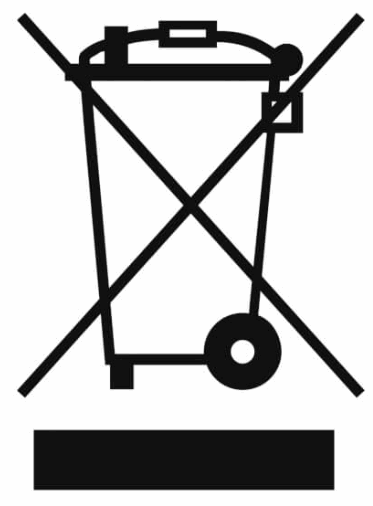
If a product bears the crossed-out wheeled bin symbol, it can generally be assumed that the product was manufactured or placed on the market after 2006. The German National Register for Waste Electrical Equipment (Stiftung EAR) specifies that the manufacturer's take-back obligation for B2B equipment applies to products placed on the market after March 23, 2006.
The year of manufacturing can be determined as follows, depending on the brand:
- WTW
The year of manufacturing can be identified by the first two digits of the serial number (for example, "06…" indicates the year 2006).
- Sensortechnik Meinsberg
Since 2006, the manufacturing date has been indicated on the product nameplate.
- SI Analytics®
Since 2006, the manufacturing date has been printed on the product nameplate in WW/YY format (for example, 12/06 indicates calendar week 12 of 2006).
- Instruments with pH and conductivity measurement functions
The manufacturing date is located either after a slash at the end of the serial number or within the first four digits of the serial number in YY/WW format.
- MJK
For products manufactured through 2023, the year of manufacturing can be determined from the serial number. Please contact Technical Support for assistance.
Beginning in 2024, the year of manufacturing can be identified by the first two digits of the serial number.
- Bellingham + Stanley (B&S)
For products manufactured through 2023, the year of manufacturing can be identified directly from the product number (for example, RA 23 094).
Beginning in 2024, this numbering system continues (for example, RA 24 001).
For products that were placed on the market in the United Kingdom, the applicable UK take-back and disposal regulations apply. Please refer to the guidance provided by the relevant Xylem UK organization: https://www.xylem.com/en-uk/
Batteries and Used Batteries
Batteries contain valuable raw materials that can be recovered through appropriate collection and recycling processes. At the same time, they may contain substances that can adversely affect the environment and human health if disposed of improperly. For this reason, batteries must not be disposed of with household waste.
Xylem supports the objectives of Regulation (EU) 2023/1542 on Batteries and Waste Batteries, which promotes a sustainable and resource-efficient circular economy for batteries throughout their entire life cycle.
Returning Used Batteries
Used batteries may be returned free of charge through municipal collection facilities, retail take-back locations, or other authorized collection systems. As a distributor of batteries, we are required to accept used batteries of the types that we currently sell or have sold in the past.
Used batteries may also be returned by mail (postage prepaid) to:
Xylem Analytics Germany GmbH
For Disposal
Am Achalaich 11
82362 Weilheim
Germany
Battery Symbols
Batteries may bear the crossed-out wheeled bin symbol, indicating that they must be collected separately and must not be disposed of with household waste.
Where batteries contain certain substances above legally specified threshold levels, the following chemical symbols are used:
- Pb = Lead
- Cd = Cadmium
- Hg = Mercury
Please always dispose of used batteries through appropriate separate collection systems to ensure environmentally sound treatment and the recovery of valuable raw materials.
Packaging
Packaging plays an important role in protecting our products during transportation, storage, and use. At the same time, the responsible management of packaging materials is an essential element of a sustainable circular economy. Xylem is committed to continuously reducing resource consumption throughout the value chain and minimizing the environmental impact of packaging. To achieve this, we continuously work to make our packaging solutions more resource-efficient, recyclable, and compatible with a circular economy.
Our key areas of focus include:
- Reducing unnecessary packaging materials
- Optimizing packaging size and weight
- Improving the recyclability of packaging
- Increasing the use of recycled materials
- Reducing packaging waste throughout the product life cycle
- Supporting a sustainable and effective circular economy
Where applicable, material identification markings help ensure the proper sorting and recycling of packaging materials. Please follow the applicable national regulations for the collection, separation, and disposal of packaging materials.
Sustainability and Circular Economy
Sustainability and resource efficiency are key components of our corporate strategy. We are committed to extending product life cycles, promoting the reuse of materials, and continuously improving recycling and recovery processes.
Our initiatives include:
- Take-back and environmentally responsible treatment of end-of-life equipment
- Support for recycling and material recovery processes
- Promotion of sustainable battery management
- Optimization of packaging
- Reduction of waste
- Improvement of the circularity of products and packaging
- Conservation of natural resources
Together with our customers, suppliers, and partners, we contribute to the advancement of a sustainable and resource-efficient circular economy.
For more information about our sustainability initiatives, please visit:
2025 Sustainability Report