Industry
Xylem analytical brands play a wide role in industrial application measurement. From raw material analysis through manufacturing and quality control to the effluent that leaves the industrial process stream. See our wastewater application site, if you are interested in industrial wastewater treatment.
Whether it’s measuring the viscosity of polymers and oils with a SI Analytics’ AVS system, development of fine or chiral chemicals using a polarimeter, monitoring the concentration of blended product like urea based diesel exhaust fluids using a Bellingham + Stanley wide range RFM970-T refractometer, or measuring TAN, COD, hydrogen peroxide and even trace oil analysis using the latest TitroLine® 7800 titrator connected to a rotary auto-sampler in a chemical engineering plant; Xylem instrumentation solutions excel alongside the company’s expertise and know-how.
In the automotive and aerospace industries, our turbidity meters and photometers help keep the colours of fabric, paint and plastics consistent, just as they do in paint manufacture and blending. For those glossy chrome trims, turbidity and titration are an important part of the electroplating process, whilst handheld refractometers not only control vital engineering fluid concentrations but also the dilution of heat exchange fluids and antifreeze in solar collector systems or industrial heat exchangers.
Importantly, many industries rely on pure, clean water as part of their process. Xylem laboratory instruments help to ensure high quality water is delivered from main feed supplies as well as industrial filtration processes. Additionally, effluent leaving the site must meet local regulation and so continual monitoring as well as off line quality control checks of pH, Cond., DO, turbidity and other key parameters including ammonia, nitrate, nitrates not only assists in avoiding a hefty fine but also to safeguard the environment in which we work and play.
Continuous monitoring of pH, conductivity, oxygen, and turbidity, as well as other key parameters such as ammonium, nitrate, and nitrite, not only ensures compliance with limit values but also helps protect the environment. A central parameter in industrial wastewater analysis is the Biochemical Oxygen Demand (BOD) – it indicates the biologically degradable organic load of the wastewater and is essential for compliance with statutory limit values.
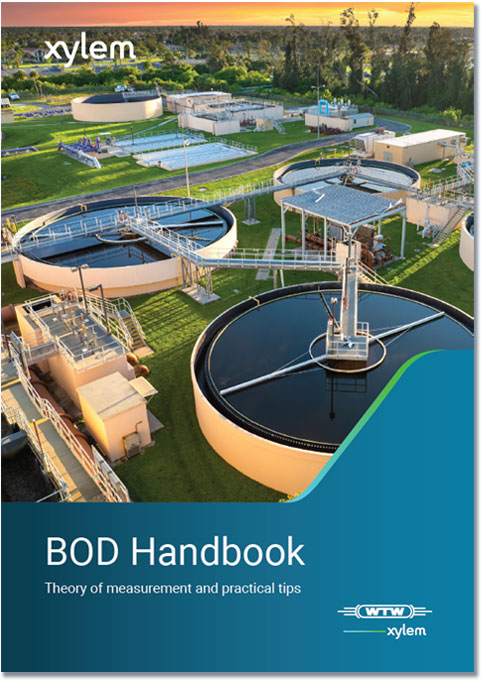 New: BOD Handbook – A Practical Guide to BOD Measurement
Would you like to explore the determination of Biochemical Oxygen Demand in greater depth? Our BOD Handbook provides practical information on biological fundamentals, measurement principles, and standardized analysis methods. Learn more about respirometric BOD measurement with the OxiTop® system, correct sample preparation, and how to handle interfering factors such as nitrification or toxic substances
Download free BOD Handbook now