Oxidation-Reduction Potential (ORP), also called Redox, measures the ability of water to either oxidize or reduce substances, which is crucial for assessing water quality and disinfection effectiveness. Find out how you can continuously measure ORP with Xylem’s measurement products.
ORP – crucial for assessing water quality and disinfection effectiveness
 In drinking water treatment, ORP (Oxidation-Reduction Potential) measurement serves several important functions related to disinfection, process control, and water quality assurance. ORP is directly related to the presence and strength of oxidizing molecules (e.g. disinfectants) or reducing molecules (e.g. organic matter). A high ORP value (>650 mV) thus typically indicates that the water has strong oxidizing potential, which corresponds to effective disinfection, while a drop in ORP can signal the presence of organic contaminants, reducing agents, or microbial growth, that can be harmful to water potability.
Continuous real-time data allow operators to assess water quality and adjust disinfectant dosing, optimizing chemical use and ensuring safety. Typical ORP ranges in drinking water depend on the raw water quality (mineral content, dissolved oxygen, and organic matter) and treatment process:
- Natural water without added disinfectants: 200 to 400 mV
- Disinfected water: >650 mV
Measuring ORP with the WTW SensoLyt® ORP 900-P
The SensoLyt® ORP 900-P is part of the IDS (intelligent digital sensors) electrode series and thus connectable via an MIQ/IDS module to the IQ Sensor Net and the WTW Drinking Water Panel. The prefilled lifetime polymer electrolyte filling and contamination-resistant hole diaphragm allow for direct use and easy cleaning. The electrode has a built-in temperature sensor for automatic temperature compensation and smart sensor head for reliable signal processing and storing of the calibration history and serial number.
Commissioning and integration with the WTW Drinking Water Panel
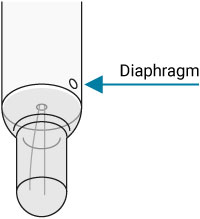
SensoLyt® ORP 900-P: Minimum immersion depth of 25 mm ensures the diaphragm is fully immersed in the solution.
The electrode’s IDS plug connection is connected to the accessory cable AS/IDS-1,5 (Order no. 903850) which is to be connected to the MIQ/IDS module. The electrode is automatically detected by the IQ Sensor Net and displayed on the terminal. The electrode is then inserted into the flow trough cell D 17 on the WTW Drinking Water Panel up to the end of the glass body and fixed. This way it is ensured that the electrode is in a vertical position and that the diaphragm hole (at the bottom end of the shaft) is fully immersed in the measurement sample.
Electrode maintenance
During operation, a small amount of reference electrolyte flows from the electrode via the diaphragm hole into the test sample. A clean and unblocked diaphragm hole is essential for that, and it is recommended to regularly clean the glass body of the electrode. Clean grease and oil contaminations with water containing detergent, limescale and hydroxide deposits with citric acid (10 % by weight). If required wet abrasive film may be used for mechanical cleaning. Rinse with deionized water after cleaning. When storing the electrode use the watering cap, filled with reference electrolyte (3 mol/l KCl, Ag+-free). Rinse the electrode with test sample or deionized water before reusing it.
Electrode calibration and lifetime
The SensoLyt® ORP 900-P is factory calibrated and immediately ready to use after commissioning. As with all ORP electrodes, the SensoLyt® ORP 900-P is a consumable and ages naturally during operation. Extreme operating conditions can considerably shorten the service life. These include strong acids or alkalis, high temperatures and strong pH and temperature changes. For continuous operation with the WTW Drinking Water Panel a half year warranty is given. During this time, it is recommended to regularly check the electrode against an ORP buffer solution (Order no. 109740). In the event of deviations from the standard outside the tolerance and despite cleaning, a change of the sensor is indicated.
To the products:
Application overview page

You may also be interested in these blog articles: